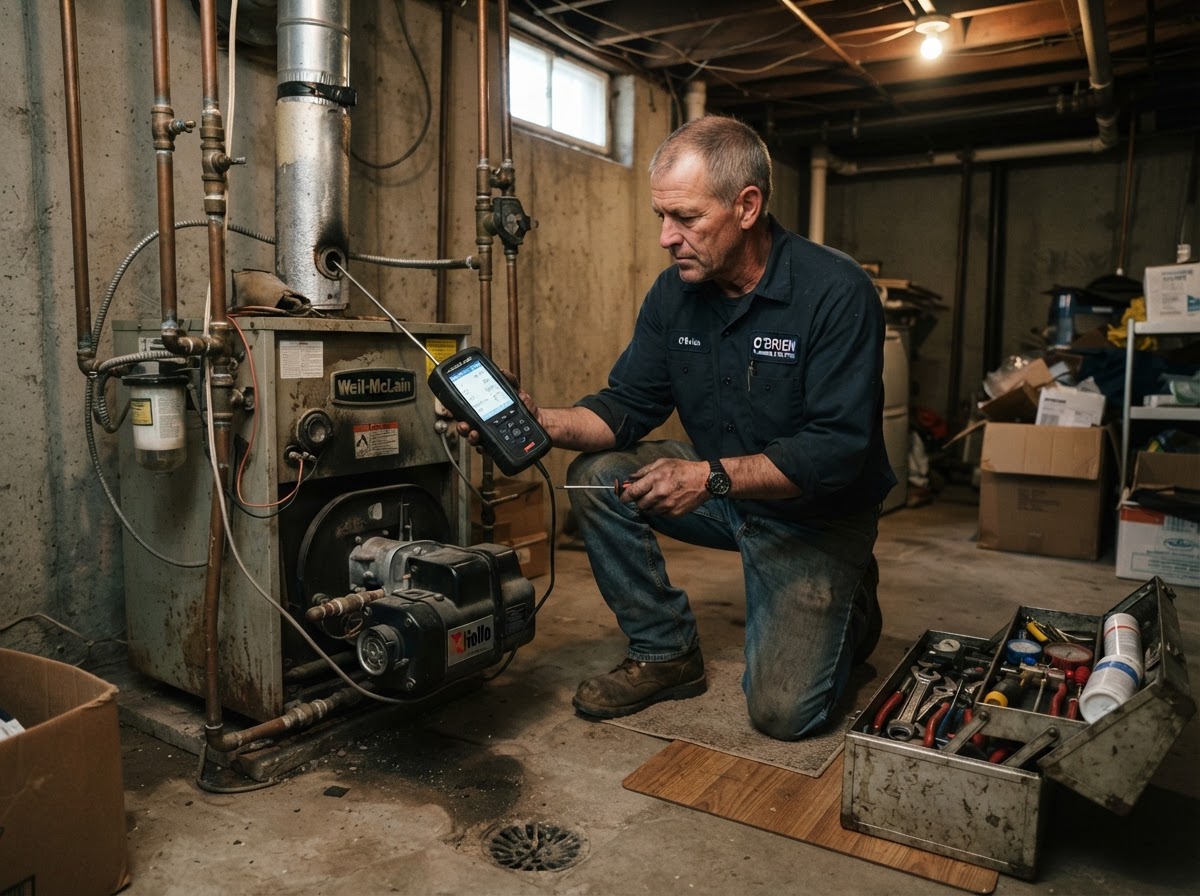
Oil to Gas Conversion in Port Jefferson Station, NY
Gas came down your street? Tired of oil deliveries and oil bills? True Quality Plumbing and Heating handles the whole switch: the new boiler, the gas line, the chimney, the permits, and the old oil tank.
Why Long Island Homeowners Switch to Gas
Oil has heated Long Island homes for generations. But more and more homeowners are switching when gas reaches their street. Here's why:
- No more deliveries. No scheduling, no running out on a cold night.
- No oil tank. Free up basement space and stop worrying about an old tank.
- Less upkeep. Gas burns cleaner, with less soot to clean out every year.
- No big delivery bills. Gas is billed monthly by the utility as you use it.
- Modern options. High-efficiency gas boilers and combi boilers don't need a chimney.
Staying on oil is fine too, especially if gas isn't on your street. See Boiler Replacement for new oil boiler options.
Step One: Is Gas on Your Street?
You can only switch if a National Grid gas main runs on or near your street. Check with National Grid first. If neighbors have gas meters on the side of their houses, there's a good chance it's available.
National Grid runs the gas line from the street to your house and sets the meter. That part is scheduled through them, and it's often the longest wait in the whole project. We help you plan around it.
How an Oil to Gas Conversion Works
Estimate visit.
We look at your boiler, chimney, hot water setup, and oil tank. We plan where the gas line will run and give you a written price.
Gas service from National Grid.
You apply with National Grid for gas service. They bring the line to your house and set the meter.
Permits.
The Town of Brookhaven has a permit category just for oil to gas conversions, plus permits for the gas line and a gas pressure test. We file them. In Port Jefferson Village, we file with the village.
New boiler or burner.
Most conversions get a new gas boiler. Some newer oil boilers can take a gas burner instead, but only if the boiler maker approves it for that model. We'll tell you which makes sense.
Gas piping.
We run the gas line from the meter to the boiler and any other gas appliances, with shutoff valves and a drip leg to catch debris.
Venting.
Gas exhaust is cooler and wetter than oil exhaust. It can eat away at an unlined brick chimney, so a standard gas boiler often needs a chimney liner. A high-efficiency boiler vents out the side of the house instead.
Pressure test and inspection.
We pressure test the new gas line and get it inspected.
Fire it up.
We fire the new boiler, test every zone, and show you how it all works.
What About Your Hot Water?
If your oil boiler also makes your hot water, you'll need a new way to heat it. Three good options:
- Gas water heater. A separate tank with its own burner.
- Indirect water heater. A tank heated by your new gas boiler. Lots of hot water.
- Combi boiler. Heat and hot water in one wall-hung unit. No tank.
We'll help you pick the right one. See Water Heater Replacement.
What Happens to Your Oil Tank?
Once you switch, the old oil tank has to be dealt with. It's usually removed, or closed and left in place if it's buried.
In Suffolk County, home heating oil tanks under 1,100 gallons don't have to be removed by law unless they're leaking. But buyers, banks, and insurance companies often want proof that an old tank was closed properly. That's why most people take care of it as part of the conversion.
We'll go over your tank options at the estimate and help you get it closed out the right way, with the paperwork to show for it.
Why the Chimney Matters
Oil exhaust is hot and dry. Gas exhaust is cooler and full of water vapor. In an old brick chimney without a liner, that water condenses and turns acidic. Over time it eats the mortar and can let exhaust leak.
A stainless steel liner protects the chimney and keeps exhaust moving out safely. If you choose a high-efficiency gas boiler, it vents out the side wall with plastic pipe, and the chimney isn't used at all.
Is New York Banning Gas?
Not for homes like yours. New York's all-electric buildings law applies to new buildings. It doesn't stop you from converting your existing home to gas or from replacing a gas boiler later.
Oil to Gas Conversions Near You
We convert homes from oil to gas in Port Jefferson Station, Terryville, Port Jefferson, East Setauket, Setauket, Mount Sinai, Coram, and Selden.
Gas runs on many streets in these towns, but not all. Many homes in Port Jeff Station, Mount Sinai, and Selden were built in the 1960s and 70s with oil heat and a 275-gallon tank in the basement. As neighbors switch, gas often becomes available on more streets.
Oil to Gas Conversion Questions
Related Heating Services
Ready to Switch From Oil to Gas?
Call True Quality Plumbing and Heating for an estimate. Licensed master plumber in Port Jefferson Station.